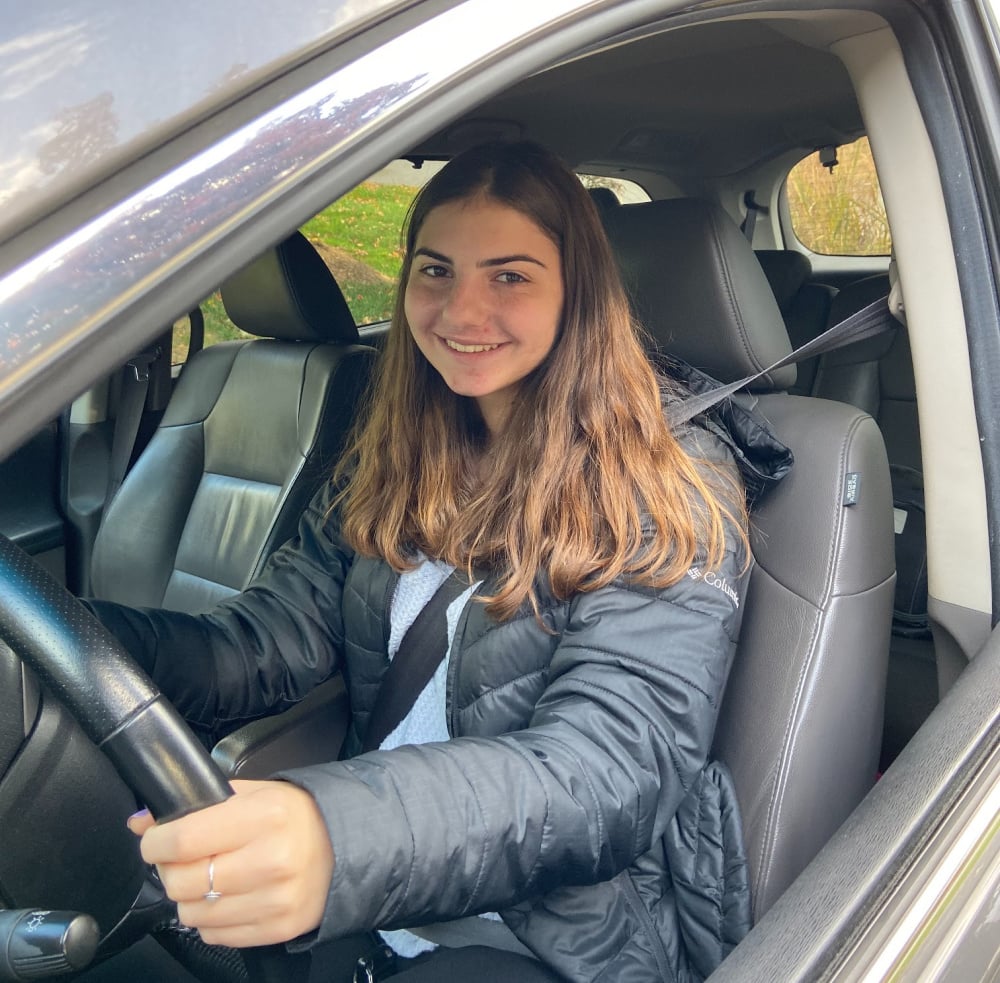
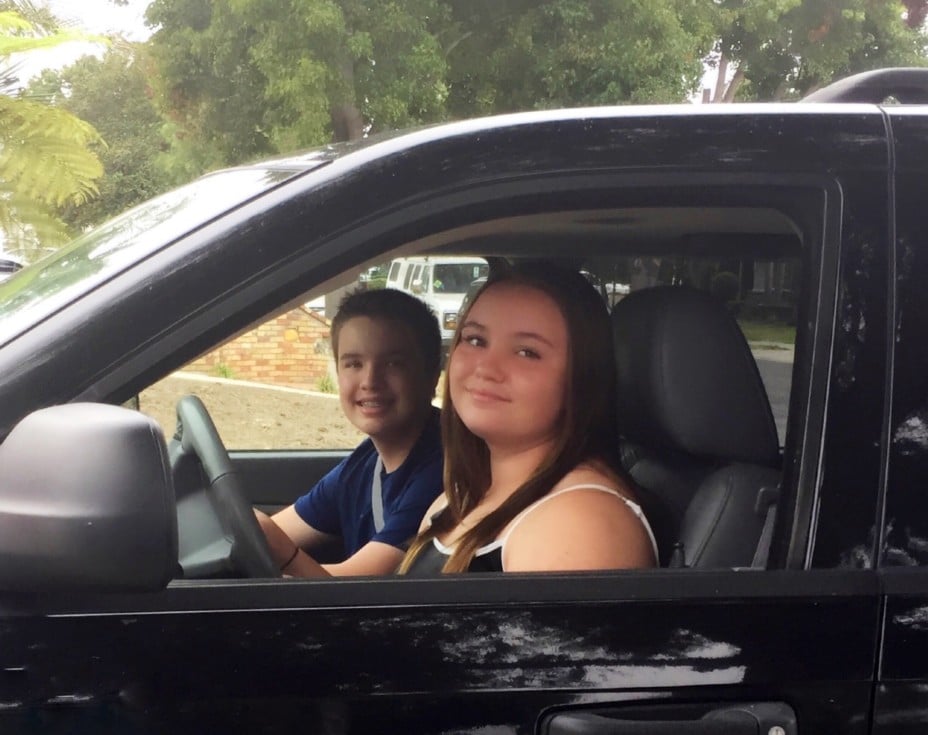
The first time my daughter drifted toward the center line, I grabbed the wheel. It was a reflex. Two months into teaching her to drive, on a quiet road I’d picked precisely because nothing ever happens there. She eased six inches to the left, a totally normal correction, the kind every driver makes a hundred times a day without thinking. But my hands were already moving. I yanked the wheel right. She panicked. We jerked across our lane, and the car coming the other way had to swerve onto the shoulder to miss us.

We sat there afterward, both shaking, neither of us talking. And the thing that finally landed on me, sitting in that silence, was this: the dangerous driver in the car that day wasn’t the sixteen-year-old. It was me.
Teaching a teen to drive is the first big thing where intervening is a mistake
I think a lot of parents arrive at some version of this moment and don’t quite let themselves see it. We’ve spent sixteen years being the protector, the one who catches them before they fall off the playground ride, who checks the car seat straps twice, who lies awake when they’re out past curfew. And then we hand them two tons of steel and tell ourselves the job is the same. Protect. Intervene. Save them from the mistake.
But teaching a teenager to drive is the first big thing where intervening is the mistake. Here’s what I didn’t understand until I went looking for it: professional driving instructors are trained not to do what I did. They have a whole framework for it. They sit on their hands. They use specific, calm phrases instead of gasps.
A driving instructor who grabs the wheel is not teaching anything useful
They give the new driver room to make the small error and correct it themselves, because that self-correction is the entire point, it’s how the skill actually gets wired in. An instructor who grabs the wheel every time isn’t teaching driving. They’re teaching the kid that they can’t be trusted to drive.
Nobody hands parents that training. We get the learner’s permit, a pat on the back, and somewhere between 50 and 100 hours of required supervised practice, more time behind the wheel with our kid than any instructor will ever get, and zero tools for how to actually spend it.
So we white-knuckle it. We suck air through our teeth at every yellow light. We say “BE CAREFUL” forty times a drive, which, I eventually learned, a scared teenager’ brain literally cannot act on. (“Be careful” isn’t an instruction. “Ease off the gas” is.)
I decided to treat the hours in the car as something we’d build together
What changed everything for me wasn’t a technique, exactly. It was a decision to treat those hours as the last great thing we’d build together rather than a gauntlet we had to survive. So I started doing three things.
First, before every drive, I took sixty seconds in the driveway to get my own nervous system under control because I finally understood that my fear was contagious, that the moment I tensed up, she tensed up, and a tense driver is a worse driver.
Second, I traded my panic words for calm, specific ones. Not “slow down!” but “ease off the gas.” Not “watch out!” but “check your mirror.” The difference in how she responded was immediate and a little embarrassing like I’d been speaking a language she couldn’t decode and finally switched to one she could.
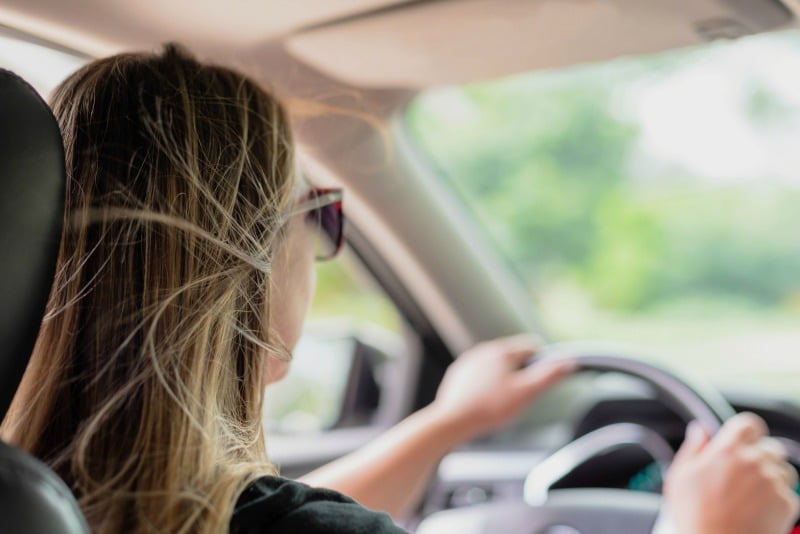
And third, the hardest one, I kept my hands in my lap and let her correct her own drift. Every single time it terrified me. Every single time she did it.
Then our drives turned into great opportunity for conversation
The drives got quieter. Then they got good. Somewhere around hour forty, I noticed we
were talking, really talking, the way you only seem to in a car, both of you facing forward, the conversation easier because nobody has to make eye contact.
She told me things on those drives she’d never have told me across a kitchen table. The thing I’d been dreading turned into the thing I’m going to miss most.
She drives away
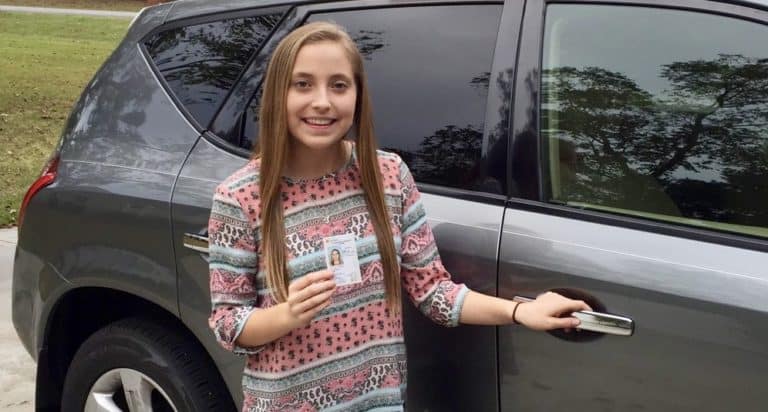
She’s licensed now. The other week she backed out of the driveway, gave me a little wave,
and drove off to meet her friends, and I stood there in the garage with that specific ache
every parent knows, the one where pride and grief are the exact same feeling. I keep thinking about that first day, my hands flying to the wheel, sure I was protecting her. I wasn’t.
I was telling her I didn’t believe she could do it. The whole job of that year, it turns out, was learning to believe she could, calmly, steadily, with my hands in my lap, long enough for her to believe it too.
That’s the real work of teaching a teenager to drive. Almost none of it is about the driving.
More Great Reading: