The first night I met my former husband at a folk dancing party, I told him I wanted to adopt a baby from China. It wasn’t casual conversation. It was something I had already decided about my life. I remember saying it plainly, almost as a declaration: I am going to adopt a baby from China.
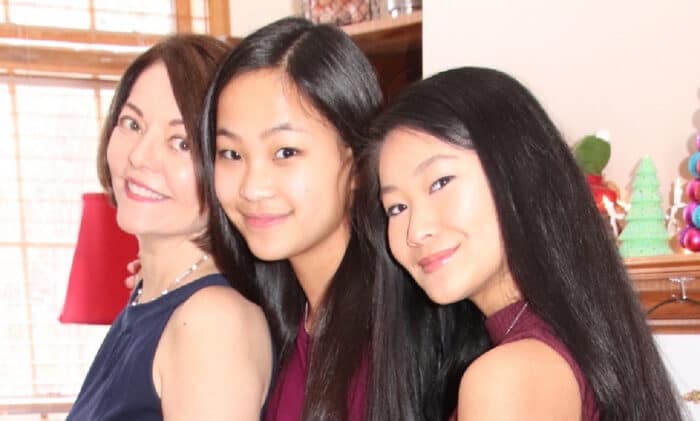
I waited for hesitation — questions about cost, logistics, or whether this was realistic. Instead, he smiled and said, “That’s incredible.” The next morning, he emailed me and mentioned it again, “I love your idea to adopt a baby from China.” I remember thinking, maybe I can date this guy.
After we married, we began the paperwork to adopt a baby girl
Shortly after we married, we began the paperwork for the baby girl we would name Kathryn. International adoption is not romantic in the way people imagine. It is background checks and fingerprinting. Financial disclosures and medical clearances. Home studies. Interviews. Dossiers that must be authenticated and sent overseas. It is months — sometimes years — of waiting without guarantees.
It requires patience, resilience, and a shared sense of purpose.
At the time, we had that. When it was time, we traveled to China to meet our daughter — the first of two life-changing journeys. I still remember the hotel lobby filled with anxious parents clutching documents. The unfamiliar language. The careful exchange of paperwork.
The moment when a baby was placed into my arms and everything else fell away. We only saw her tiny, beautiful face. It was love at first sight. The waiting was over. We were parents.
On the flight home my husband decided he wanted to adopt again
On the flight home, as I held our daughter against my chest, he leaned over and whispered, “Let’s get another one.” I laughed, completely surprised. We decided to wait a year before beginning the process again.
We did. A few years later, we received another referral — another beautiful baby girl we would name Lindsey.
We built our family one leap of faith at a time. Years later, our marriage ended. We divorced many years ago and have both since remarried. Like many long relationships, ours was layered and complicated. Ultimately, it did not endure.
Our decision to become parents together endures
But one decision we made together continues to define our lives: we adopted our daughters from China. Whatever later fractured in our marriage, that shared commitment remains foundational. We chose to become parents together. We walked through an uncertain and demanding process side by side. We built a family.
Our daughters are young adults now, building full lives of their own. Careers. Relationships. Busy schedules. As happens naturally over time, their contact with their father lessened. Not because of anger. Not because of drama. Just because adulthood pulls children forward.
Recently, I took them to visit him. He is older now and battling cancer. Conversations move more slowly. At times he searches for words. Some memories slip away before he can finish a sentence. The future feels more fragile than it once did.
There is a delicate balance between stepping back and stepping in
As parents of adult children know, there is a delicate balance between stepping back and stepping in. We no longer manage their calendars or make their decisions. But there are moments when quiet guidance still matters. Illness is one of those moments.
There is a difference between distance and closure. I chose to take them because I did not want them to carry regret. I did not want unanswered questions to grow heavier years from now. I wanted them to have the opportunity — not the obligation — to see him as he is today.
The visit was not dramatic. There were pauses. Some small talk. A few shared memories. No sweeping reconciliations. No perfectly delivered speeches.
As their mother, I could not control what my kids visit with their dad would mean to them
But they were there. They asked about his treatments. They listened. They hugged him goodbye. As their mother, I knew I could not control what this visit would ultimately mean to them. I could only create the opportunity. Whether they process it fully now or years from now, they will know they showed up.
Divorce reshapes a family permanently. It redraws holidays. It shifts traditions. It introduces new partners and new histories. But it does not erase shared origins. Our daughters’ story began with two people who agreed, on a first date, to dream boldly. That truth remains, regardless of how the marriage ended.
Parenting adult children often means recognizing that relationships evolve. Proximity changes. Communication changes. But when serious illness enters the picture, time feels different. More finite. More urgent.
Our role as parents is not to shield our children from discomfort
But as parents, sometimes our role is not to shield our children from discomfort. It is to help them face meaningful moments while they still have the chance.
I did not arrange the visit because the past is neatly resolved. It isn’t. Most long marriages that end leave behind both gratitude and grief. That complexity does not disappear simply because papers are signed.
Our marriage did not last.
The dream did.
Our marriage no longer exists but the family we created does
The family we created continues — through graduations, first apartments, new jobs, and now through a hospital room conversation that might otherwise have been missed. Not every partnership endures. But some decisions outlive the relationship that carried them.
And when you are raising young adults, you begin to understand that showing up, even imperfectly, can matter more than resolving everything.
I am grateful that on that first night, at a crowded folk dancing party, when I spoke about adopting from China, he said yes.
That ‘yes’ shaped the rest of my life.
More Great Reading:
What’s Really Behind the Disappointment of My Cancelled Family Trip