College students who live in dorms on in off-campus apartments need to be prepared with the upcoming major winter storm that’s expected to impact much of the country.
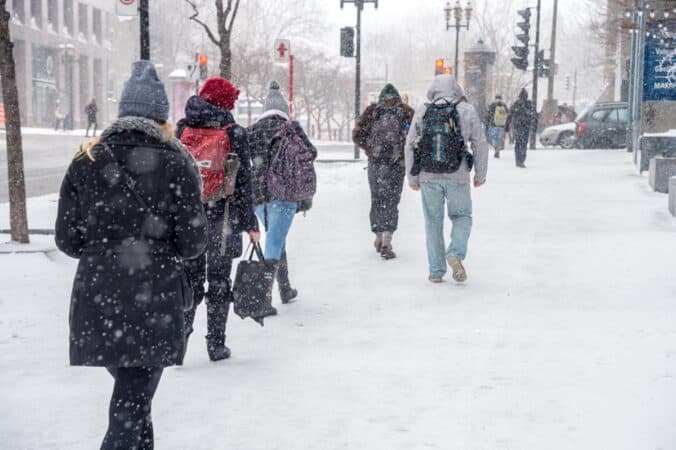
Here’s a checklist for the next 24-48 hours before the storm ushers in snow, ice and sub-freezing temperatures.
Storm‑prep checklist for students in dorms or off‑campus apartments
24–48 hours before the storm
- Charge phone, laptop, tablet, power banks, and any rechargeable lanterns or flashlights.
- Fill reusable water bottles and, if possible, extra jugs (aim for at least a few liters per person).
- Pick up prescriptions, over‑the‑counter meds, and any essential supplies (contacts, inhalers, etc.).
- Top off campus card/cash; keep some small bills in case electronic payment systems go down.
- Do one laundry load so you have clean warm clothes, socks, and extra layers ready.
- Find the hat and gloves your mom may have insisted you pack for “emergencies.” Clearly this is that emergency she wanted you to be prepared for.
Food and kitchen prep
- Buy 2–3 days of no‑cook or easy‑cook food: peanut butter, bread/tortillas, granola bars, instant noodles, canned soup, tuna/chicken, trail mix, fruit cups.
- Make sure you have a manual can opener if you bought canned goods.
- Freeze a few water bottles or ice packs to help keep food cold if power fails.
- Avoid stocking lots of fresh meat or dairy right before the storm in case the fridge loses power.
Room and building prep
- Choose one interior room or area to “camp out” in if it gets very cold; gather blankets and sleeping bags there.
- Lay out warm clothing: base layers, sweater/hoodie, coat, hat, gloves, thick socks.
- Locate your building’s emergency exits, fire alarms, and the place where you’d meet roommates if you had to evacuate.
- If you control the thermostat, set it slightly cooler now so the system is not overworking at the last minute, and confirm vents are not blocked.
Pipes, power, and electronics
- Know where to report maintenance issues (burst pipes, leaks, broken heaters) for campus housing or your landlord.
- Plug laptops and phones into surge‑protected power strips if you have them; unplug nonessential electronics before the storm arrives.
- Download lectures, readings, maps, and entertainment (movies, playlists, ebooks, podcasts) for offline use.
- Find or buy at least one flashlight or battery lantern; avoid relying only on candles.
Travel and transportation
- If you have a car, fill the gas tank and move the car away from large trees or power lines if possible.
- Put in the car: blanket, water, snacks, scraper (if available), small flashlight, phone charger. Keep the scraper in your dorm or apartment as you might not be able to open the car door or trunk if there is heavy snowfall.
- Decide now whether you’ll stay on campus, go to a nearby friend’s place, or go home; avoid last‑minute travel once ice or heavy snow starts.
Campus communication and safety
- Enroll in or confirm you’re signed up for campus emergency alerts (text, email, app).
- Bookmark local weather, campus safety, and local emergency management pages on your phone.
- Learn where official warming centers, shelters, or designated “ride‑out” buildings are on or near campus.
- Write down important numbers on paper: campus security, housing/RA, maintenance, local non‑emergency police, roommates and close friends.
Medical and accessibility needs
- Prepare a small first aid kit: basic pain reliever, fever reducer, any allergy meds, bandages, thermometer if you have one.
- Charge and, if possible, have spare batteries for medical devices and flashlight.
- Identify at least one place (friend’s dorm, another building) with more reliable power/heat where you could relocate temporarily, if need be.
Social and mental prep
- Plan a few low‑tech activities (board/card games, offline study plan, reading) to help manage stress if the power or internet go out.
- Coordinate with roommates on shared supplies so you don’t all buy the same items unnecessarily.
- Check on friends who are far from home, new to cold weather, or without transportation, and make sure everyone has somewhere safe to stay. This is possibly the most important thing you should do.
Natural Weather Service
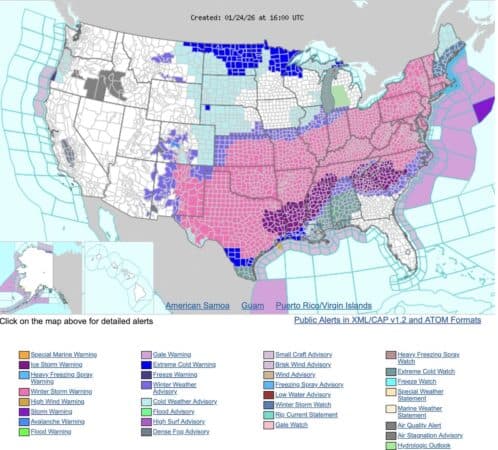
Here’s how the Natural Weather Service describes this upcoming massive storm: Significant Winter Storm to Bring Heavy Snow and Ice Impacts; Dangerously Cold Temperatures Expands Across the East.
A significant, long-duration winter storm will bring widespread heavy snow, sleet, and freezing rain from the Southern Rockies to New England through Monday. Widespread travel disruptions, prolonged power outages, and vast tree damage is likely. Frigid temperatures, gusty winds, and dangerous wind chills will expand from the north-central US to the Southern Plains, MS Valley, and Midwest.” Updated 1/24/26 at 11AM ET.
National and local emergency-sites for help during a natural disaster
College students should find and bookmark any local or state natural disaster information sites to be prepared.
State and local information
State or local emergency‑management agency site (ex. FloridaDisaster.org in Florida)gives area‑specific alerts, evacuation info, and localized preparedness tips.
Red Cross Winter Storm Safety
American Red Cross: Winter Storm Safety
Step‑by‑step preparedness checklists, first‑aid info, shelter and disaster‑response details, plus a mobile emergency app.
General disaster and health
CDC Emergency Preparedness and Response
Guidance on preparing for natural disasters, severe weather, outbreaks, and what to do before, during, and after events.
More Great Reading:
10 Ways Parents Can Help Their College Students Prepare For Dorm Emergencies