A few weeks ago, “Tom,” a first-year student in the community where I am House Professor at Dartmouth College, stopped by my office to talk about his friendships. He felt anxious that other people had a “more solid group” than he did.
Tom described it as “confusing” that although he made “many, many friends,” he “often [doesn’t] know who to spend my time with.” Tom also felt like it was harder to make friends now than it was when he first arrived.

Tom is not alone in his preoccupation with friendship. Millions of new students arrived on college campuses this fall. While politics, tuition, and AI on college campuses dominate the news, friendship is also central to college life. If you know a college student or think back to your own experiences in college, you understand that friendship is likely top of mind.
Friendship is very important to college life
In the twenty years that I have taught and researched on college campuses, I have noticed how important friendships are in students’ lives and how they can support academic and social success. The suggestions I shared with Tom are useful for anyone talking with a college student who is wondering if January is too late to change up their friendships.
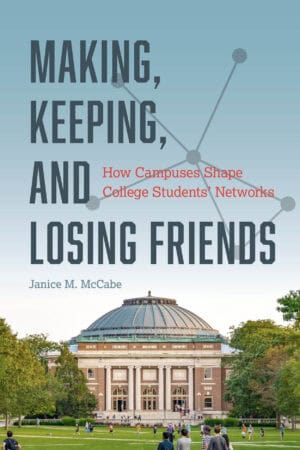
First, I named the “initial friendship market” shaping the rhythms Tom noticed. As I discuss in my new book Making, Keeping, and Losing Friends, in the first few weeks of college, students are eager “buyers” and “sellers” of friendship. The initial friendship market is stronger at colleges where orientation and programming in dorms for first-year students intentionally brings new students together.
Regular encounters in dorms and activities encourage connections and make them feel easy. This is how Tom met his “many, many friends.”
Sometimes students confuse easy friendships made in the “initial friendship market” with good friendships
Sometimes students confuse easy friendships made in the “initial friendship market” with good friendships, those that are meaningful and nurturing. The structures in college make it easy to connect with some people, but not necessarily those who support and uplift us.
Tom had doubts about whether these first friends would be his lifelong friends, yet he also was putting a lot of pressure on himself (and his friends) for this to happen. When I explained that there are also “secondary friendship markets” later in college, Tom visibly looked relieved.
I encourage students to be intentional about their friendships, investing in those that are meaningful. Students, like Tom, who wonder “who to spend my time with,” might ask themselves: Who are the friends who make me feel good? Who are the ones who support me, emotionally and academically? Which of my friends do I feel like I can be myself around?Which friends bring out a better version of me?
Students should participate in multiple communities
I also encourage students to participate in multiple communities. Although we tend to idealize having one tight-knit community, it is risky to put all your eggs in one basket. Friendships change often, especially during college.
Students who want more or different friends might seek out secondary friendship markets. Secondary friendship markets can be powerful anytime, but they are particularly active at the start of each new semester. Put yourself in spaces where people have repeated encounters, such as clubs, classes, and study abroad. And interact in these spaces. To identify where to start, students can ask themselves: Do I have parts of myself that I don’t feel I can share with friends?
Then pursue activities related to those parts – if it’s about your religious identity, seek out the Christian Student Union, the Hillel Center, etc., as matches that identity. Because not everyone in these spaces is looking for new friends (i.e., as “buyers”), it takes more persistence than navigating the initial friendship market.
Making and keeping friends requires work
Making and keeping friends requires work. Invite them to lunch, to study together, to take a class, or to attend club meetings together. Even better than a one-time activity is a recurring one–have lunch every Tuesday after class or study together every Sunday evening. When you notice a potential friend in classes or clubs, start up a conversation and then invite them to meet up, drawing on the benefits of the secondary friendship market.
Put time with friends in your calendar. The trick is to not just to spend time with the friends who are around during free time, but to make sure you prioritize meaningful relationships as well as time with friends. The friends who do not require scheduling may be the “many, many friends” you made easily, as Tom put it, rather than the meaningful ones.
Knowing how to recognize and capitalize on the friendship markets that exist in college can help students to form meaningful friendships, not just friendships of convenience. By reflecting on the ways students find and navigate friendships in college, students can recognize that, although friendships can feel random, they do have agency over making friends in January—and beyond.
More Great Reading:
Five Free Campus Resources Your Teen Should Take Advantage of Now