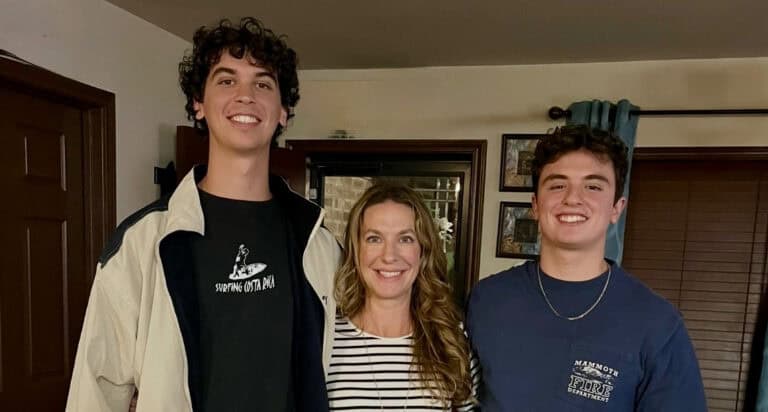
Every Sunday at 6 p.m., my son and I sit down together.
We started calling it College Sunday, which tells you everything about my original intentions. It began the summer before his junior year, when questions about gap years, a career, and college felt urgent. I saw these weekly meetings as strategy sessions and a way to help him narrow his options and make wise choices.

Conversations with my son followed a predictable pattern
What I didn’t anticipate was how quickly concern can turn into pressure with a teenager. Before College Sunday, our conversations followed a predictable pattern. I asked too many questions. He answered defensively.
I pushed. He shut down. He felt scrutinized, even though I thought I was guiding him. I knew from the first meeting that if I didn’t change my approach, we’d just repeat the same conflict.
So I made a rule: one to three questions per conversation. No follow-ups masquerading as clarifications. No rapid-fire “what abouts.” Just a lot of listening and very few questions. At first, it seemed almost irresponsible. Teen parenting can feel like crisis prevention. Wouldn’t he drift if I didn’t press?
But slowing down changed everything. I learned to sit through silence. I practiced keeping a neutral expression. Even a parent’s raised eyebrow can be interpreted as a verdict.
Then, something unexpected happened: my son began thinking out loud when I stopped steering. He paused, revised mid-sentence, and startled both of us. He started responding to himself rather than me. In real time, he was testing ideas, circling back, and changing his mind.
Our discussions became more genuine, less staged
Our discussions seemed more genuine and less staged. “College Sunday” eventually softened into our “Sunday Sit-Down.” It became less about outcomes and more about space. I cleared the room of shame. There was no wrong interest, no embarrassment in not knowing. Once I stopped reacting, he stopped defending.
I also became more intentional. I only get about fifty of these Sundays a year. That’s fifty opportunities to ask questions that might aid in his self-reflection. Instead of steering his future, I used questions to help him explore his sense of self. What did I genuinely want to know? What could assist him in articulating his values and curiosity?
We share a digital notepad. I organize lists and possibilities far more than he does. Conversations are spaced about a week apart. I fight the impulse to pounce when something comes up. Now I save it.
“I ran across this today,” I’ll say at our sit-down.
“What do you think about kids your age doing this?”
“What advice would you give your younger sibling?”
These aren’t trick questions. They’re invitations.
Our conversations are more an invitation to hear what my son’s thinking
Week by week, he considers who he’s becoming. No more pressure, just conversation. I see more of his internal world than I ever did through grades or deadlines.
Now he’s a high school senior. Applications have been submitted, and decisions are rolling in. His early action first-choice, with an acceptance rate under 10%, was deferred, so we are keeping the plan fluid. As the stress of senior-year builds, I reflect on junior-year lessons. It was a critical year when we established the groundwork for communication, trust, and reflection.
Those Sunday meetings, which once felt experimental, are more important than ever. They remind me to pause, pay attention, and give him space before the whirlwind accelerates.
Do I still worry? Constantly.
Do I still have opinions? Of course.
But restraint isn’t apathy. It’s trust.
Our weekly meeting is our way of staying connected
Our weekly meeting doesn’t feel like a meeting anymore. It now resembles more of a “Sunday Sync.” It’s my chance to listen without correcting, to align without pushing, and to stay connected while he considers what comes next.
I used to believe good parenting meant asking the right questions. I now realize it also means knowing when to ask fewer questions and having faith that silence can offer just as much.
More Great Reading: