He didn’t die. Not the first time we thought he might, or the many times afterward.
I learned something I never wanted to know: surviving your worst nightmare doesn’t mean you’re no longer afraid. It simply moves the bar.
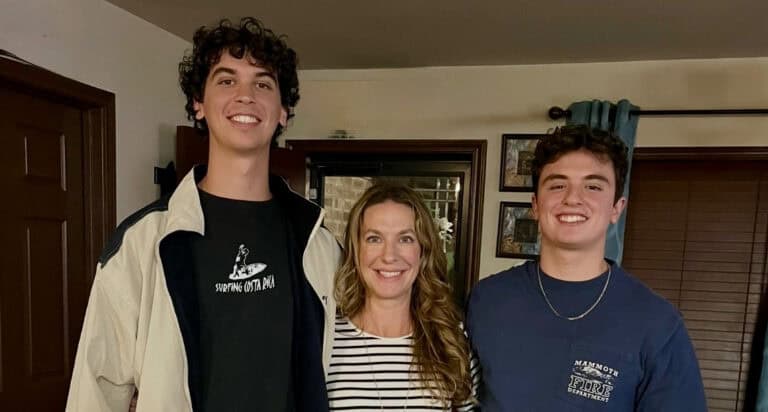
My son, Sam, was diagnosed with T-cell leukemia at eleven years old. He had suddenly lost his appetite and was losing weight. It was the summer of 2020, and when his COVID test came back negative, I knew something was truly wrong.
The doctor told us he might not survive the weekend
We went to a pediatrician, though not his usual one, for what was supposed to be a routine sick visit. I was told he was probably depressed, an explanation that fit absolutely nothing about the situation.
Despite Sam’s loud protests, I pleaded for a blood test. Later that evening, the results came back, and we raced to the hospital. There we learned that this particular type of leukemia can progress with frightening speed. The doctor told us he might not survive the weekend.
Somehow, he did.
Over the next three years, we survived many medical challenges
Over the next three years, we survived infections I had never heard of, repeated episodes of sepsis, feeding tubes when chemotherapy destroyed his ability to eat, and the devastating effects of high-dose steroids that eventually led to double hip replacements before he was old enough to drive.
When I was pregnant, my mother-in-law told me that motherhood would always be an exercise in wishing for the next thing. First, you hope your baby is born healthy. Then you hope he’s smart. Then kind. Then athletic. Then happy. The wishes never end.
She was right.
When the worst happens, nothing else matters but health
When the worst happens, though, you go back to square one. Suddenly, none of those other hopes matter. You don’t care where they go to college or whether they make the varsity team.
You don’t wonder what career they’ll choose. You have only one wish left: let them be healthy. Sam’s childhood wasn’t typical, but neither was his experience with childhood cancer. Because of COVID restrictions, the treatment rooms were quiet.
Children weren’t gathered around chemotherapy pumps playing video games together. They weren’t building friendships with the only people who truly understood what they were living through.
Sam made two friends during treatment. Neither of them survived. Even now, he admits that he tries not to think about the guilt he feels for being the one who did.
He has now been in remission for three years. Next year he will be a senior in high school, and we have begun talking seriously about college. I couldn’t be happier for him.
And I couldn’t be more terrified. What if I’m not there to catch it next time?
That question has nothing to do with medicine anymore.
My son’s illness taught me how fragile life is
His illness taught me that life is astonishingly fragile and that control is often an illusion. In many ways, that realization made me less anxious. Once you’ve learned that the rug can be pulled out from under you no matter how carefully you’ve planned, you stop believing that perfect planning guarantees perfect outcomes.
But there is still a voice that whispers that maybe Sam survived because I insisted on that blood test. The doctor thought it was unnecessary. I didn’t. My instincts were right.
It’s hard not to let your mind believe that vigilance is what kept your child alive. So now I find myself facing a challenge every parent eventually encounters, but through a very different lens.
How do you stop believing that your presence is what keeps your child safe?
How do you let go of someone you spent years trying desperately to keep alive? How do you stop checking? Stop worrying? Stop believing that your presence is somehow part of what keeps them safe?
I worry that he’ll read the anxiety on my face before I ever say a word. Living together in a hospital room for so long gave us an understanding of one another that doesn’t require conversation. He knows me too well.
These days I find myself living with two competing truths. One part of me still remembers that all I ever wanted was for him to survive. The other part has quietly returned to hoping for all the ordinary things again—that he gets into the college he loves, finds lifelong friends, joins a fraternity if that’s what makes him happy, discovers work that fulfills him, and builds a life he can’t wait to wake up to each morning.
I understand what a privilege it is to let my son go
In other words, I’ve become every other mother trying to let go. The difference is that I know what a privilege it is. There was a time when I couldn’t imagine him graduating from high school, much less leaving for college.
Now I find myself worrying about things I once would have considered miracles. My greatest comfort is gratitude—gratitude that he survived when so many children do not, gratitude that I get to worry about dorm rooms and acceptance letters instead of blood counts and chemotherapy schedules.
One day, he may go a week without calling because he’s studying, laughing with friends, or simply busy living the life we fought so hard for him to have.
When that happens, I’ll remind myself that there was once a time when I couldn’t even imagine this future.
Letting him go will be hard.
But it is the privilege I once wasn’t sure we would ever have.
More Great Reading:
How to Help Your Teen Get College Ready When Their Health is a Serious Concern